A Significant Design Element
"La Farge’s murals were ambitious in scale, varied and sophisticated in subject matter, and experimental in technique. They were also absolutely unprecedented in the history of American Art and remain among the most significant manifestations of the American mural movement.” —Barbara Weinberg"
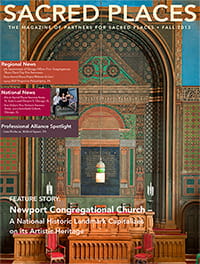
Even though he felt the final product of his labors was the “result of concessions and compromises…”, La Farge thought his green church, once finished, had “…an agreeable artistic unity.” He believed his windows to be the defining component of his unified design, but the murals were the connectors and where he experimented with design elements and the actual paint itself.
"There were large masses of green, blue and gold [on the sanctuary walls].Wherever it was possible to take up green, I did it.” —John LaFarge, The Art Amateur, 1887"
The “Green Church” Revealed
In 2013, John Canning Studios studied the murals and analyzed the paint on selected sites around the sanctuary. The above photograph shows John La Farge’s two muted greens uncovered after removal of a large plaque on the East Wall. He used these colors liberally throughout the sanctuary walls on larger spaces between decorative murals. These expanses were painted over with bright blue paint in the mid- 20th century.
Image credits
(top & middle) Chancel mural and Arch Mural detail courtesy of Aaron Usher, Photographer; 2013; (bottom) Green reveal photo courtesy of Jennifer Carter, Photographer.